
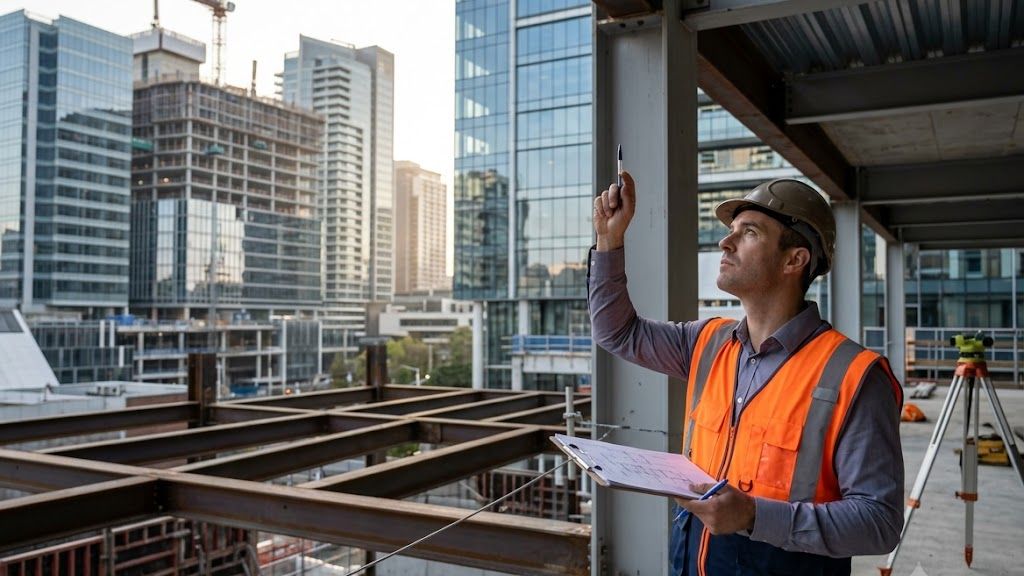
Relying on a Rochester NY structural engineer consultant is central to commercial real estate acquisitions, verifying safety and performance while identifying cost and schedule impacts. Investors and developers depend on structural assessments to quantify risk, inform purchase decisions, and protect returns. This guide describes the inspection, analysis, and code-compliance work structural engineers perform and why thorough evaluations matter for complex properties.
We cover the role of inspections, the evaluation workflow, and how condition reports support acquisition decisions.
What Is the Importance of Structural Inspection in Rochester Commercial Real Estate?
Structural inspections protect investments by finding defects and latent issues before they escalate, directly affecting acquisition decisions. Engineers identify risks—foundation distress, code noncompliance, and material degradation—and quantify their impact on safety and asset value.
Post-inspection analysis provides a technical basis for negotiation and budgeting. Engaging an engineer early reduces uncertainty about repair scope and liabilities, preserving long-term asset value.
How Does a Structural Engineer Conduct a Commercial Building Structural Evaluation?
Engineers follow a structured protocol: a systematic visual survey to record observable damage, review of historical inspection records and drawings, and verification of documentation. They then perform a code compliance review against Rochester requirements to identify remediation needs. For detailed assessments, consider consulting specialized structural engineering services.
What Risks Are Identified Through Structural Inspections in Real Estate Acquisitions?
Inspections reveal risks that materially affect acquisitions. Typical findings include:
- Foundation Issues: Cracks, settlement, or weakened foundations that compromise stability.
- Material Degradation: Corroded reinforcement, deteriorated concrete, or failing support elements.
- Compliance Violations: Deviations from local codes or regulatory requirements that trigger remediation or fines.
Early identification lets investors renegotiate terms, allocate contingencies, or withdraw when exposures exceed acceptable thresholds—critical for sound commercial property investments.
How Does a Commercial Property Condition Report Support Acquisition Decisions?
A commercial property condition report consolidates inspection data into a concise assessment of condition, repair priorities, and schedule impacts. It supplies documented evidence for price negotiations and quantifies cost and timeline implications of required work.
Reports separate immediate safety and code issues from deferred maintenance, guiding renovation sequencing and budget allocation for short- and long-term plans.
What Key Elements Are Included in a Real Estate Structural Assessment Report?
Typical components include:
- Findings Summary: A technical digest of significant observations and measured deficiencies.
- Asset Condition Rating: A clear rating that categorises the property’s overall structural state.
- Recommendations for Repairs: Specific remedial actions with prioritized steps and expected outcomes.
Together these elements give stakeholders the actionable intelligence needed to evaluate acquisition risk, remediation cost, and schedule impacts.
How Do Structural Consultants Ensure Compliance With Rochester Building Codes?
Consultants verify as-built documentation, reference local regulations, and specify corrective measures where gaps exist. They track code updates and apply them to current assessments to maintain regulatory alignment, reducing legal exposure and reassuring investors about safety and operational standards.
Why Engage a Building Inspection Consultant in New York Commercial Property Transactions?
A building inspection consultant adds technical rigor to New York transactions. Experienced consultants detect concealed defects, quantify remediation scope, and reduce transaction risk—streamlining closings and protecting long-term asset value.
Structural engineers tailor assessments to property types—from warehouses to office buildings—aligning scope with operational risks and intended reuse.
What Expertise Does a Rochester Structural Engineer Consultant Bring to Commercial Acquisitions?
Rochester structural engineer consultants typically offer:
- Licensed Professional Engineers: Certification that ensures professional standards and ethical practice.
- Experience Across Sectors: Track records across building types informing sector-specific risk assessment.
- Customized Assessments: Evaluations scoped to a property’s unique conditions and transaction needs.
This expertise produces focused due diligence that clarifies liability and informs negotiation. For consultation, consider contacting Xceed Engineering.
How Do Engineers Integrate Industrial and Nuclear Sector Standards in Assessments?
Assessments for industrial and nuclear-adjacent facilities use sector-specific standards and elevated safety protocols. Engineers apply specialised criteria to address statutory, operational, and hazard-specific requirements, making obligations explicit for decision-makers and reducing regulatory and operational risk.
What Are the Process Steps for Performing Effective Commercial Building Structural Evaluations?
Effective evaluations follow a systematic sequence, typically including visual inspection, load analysis, and detailed reporting that outlines findings, implications, and recommended next steps.
- Visual Inspection: Field reconnaissance to identify observable defects and safety concerns.
- Load Analysis: Evaluation of the structure’s capacity to support current and proposed loads.
- Detailed Reporting: Documentation that outlines findings, implications, and recommended actions.
This methodology ensures a comprehensive appraisal of structural performance and clear remediation guidance.
Which Inspection Techniques and Tools Are Utilized in Commercial Structural Assessments?
Assessment techniques include:
- Non-destructive Testing Methods: Ultrasonic testing, radiography, and similar methods that detect flaws without damaging the structure.
- Documentation Tools: Software for accurate recording, version control, and traceable inspection records.
- Analytical Software: Simulation tools that predict structural behaviour and durability under defined load cases.
Combining nondestructive testing, precise documentation, and analytical simulation provides robust evidence to support engineering conclusions and remediation planning.
How Are Findings Communicated to Support Client Risk Mitigation and Cost Savings?
Clear presentation of findings is essential to risk mitigation and cost control. Common delivery methods include:
- Report Formats: Detailed written reports presenting observations, analyses, and quantified recommendations.
- Dashboards for Risk Visualization: Visual tools that prioritise issues and illustrate exposure.
- Consultations with Stakeholders: Briefings to align technical findings with commercial decisions.
This layered communication approach helps stakeholders prioritise repairs, assess costs, and make timely decisions.
Frequently Asked Questions
What is the role of a structural engineer in commercial real estate acquisitions?
A structural engineer evaluates building integrity, verifies safety compliance, and produces technical reports that inform investment decisions. Assessments identify defects, estimate remediation scope and cost, and quantify associated risks—supporting safer, more predictable acquisitions.
How can structural assessments influence property valuation?
Assessments reveal repair liabilities and lifecycle costs. Detailed evaluations enable investors to adjust offers, set reserves, and forecast maintenance budgets so the purchase price reflects the asset’s true condition.
What types of properties benefit most from structural engineering consulting?
While all commercial properties benefit, older or complex assets—warehouses, office buildings, and retail centres—derive the most value due to structural uncertainty from age, unique systems, or adaptive reuse. Properties in hazard-prone areas also require specialised assessment.
What are common findings in structural evaluations?
Common findings include foundation cracking or settlement, water intrusion, deterioration of concrete or steel, code violations, and compromised load-bearing components. Early detection allows negotiation of repairs or budgeting for remediation.
What is the timeline for a structural engineering assessment?
Timelines vary with property size and complexity but typically range from several days to a few weeks, covering site inspection, analysis, and report preparation. Expedited schedules can meet transaction deadlines while maintaining technical rigour.
How do structural consultants support renovation projects?
Consultants evaluate feasibility, determine which elements can be retained, and specify modifications required to meet codes. Their guidance optimises design decisions, reduces construction risk, and supports cost-effective renovation strategies.
Conclusion
Retaining structural engineering consultants is essential for verifying safety, compliance, and long-term performance in Rochester commercial real estate. Their evaluations reveal risk, quantify remediation costs, and support strategies that protect and enhance asset value. To streamline acquisitions and safeguard your investment, contact Xceed Engineering.