
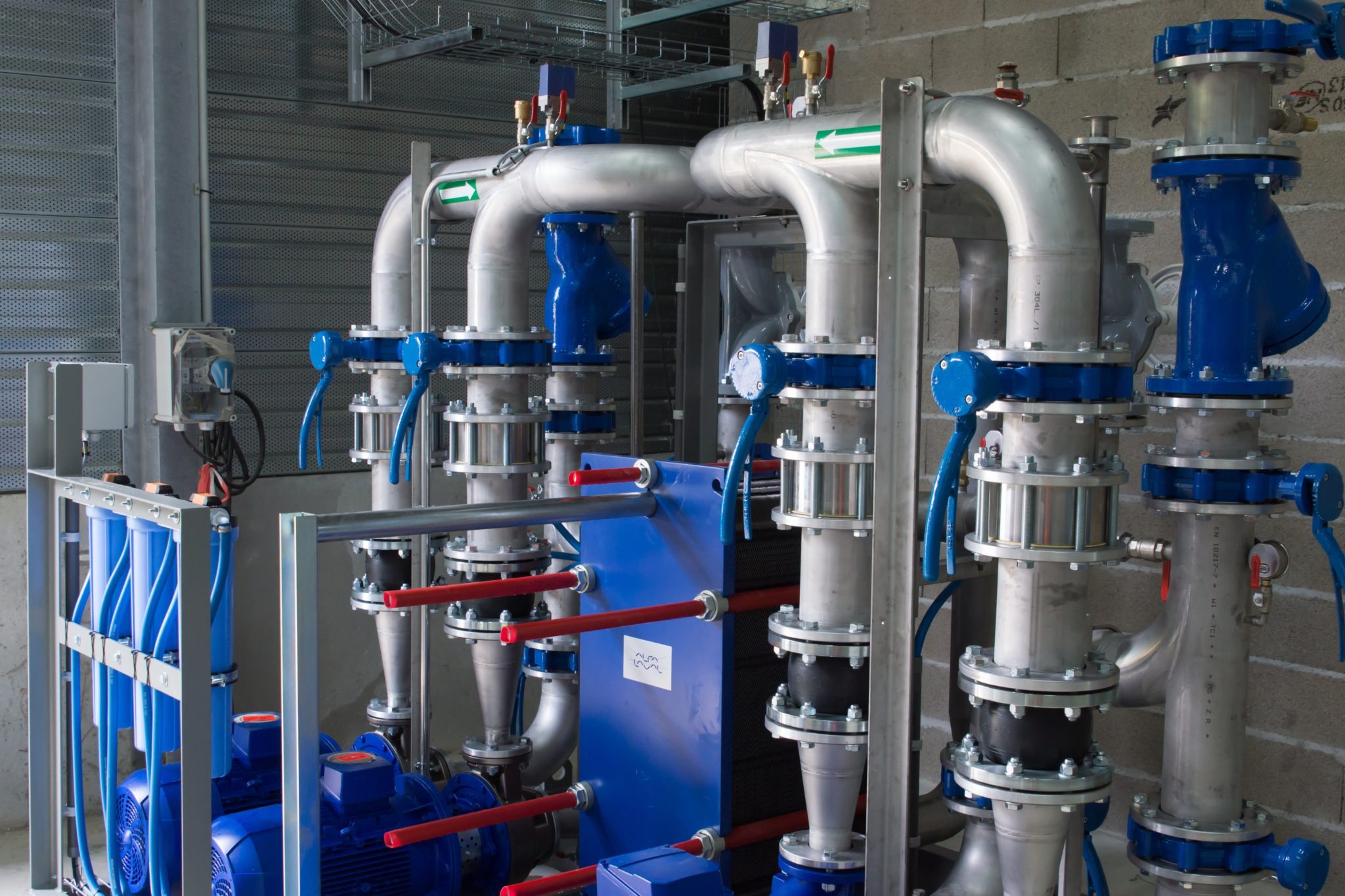
By the engineering team at XCEED Engineering and Consulting, P.C.
Pipe stress analysis services calculate the stresses, loads, and displacements in a piping system so it stays within code limits across every operating condition, from cold startup to full thermal load to a seismic event. The work protects three things at once: the pipe, the equipment it connects to, and the people who operate the plant. A qualified analysis tells you where a line will overstress, where a support belongs, and how much load a pump or vessel nozzle will actually see, before anything is welded in place.
Key Takeaways
- Pipe stress analysis keeps a piping system within the allowable stresses set by codes like ASME B31.3 and B31.1 across thermal, weight, seismic, and occasional load cases.
- Restrained thermal growth is the hidden driver: a 6-inch steel line heated from 70°F to 300°F can build roughly 42,300 psi of axial stress if it cannot move.
- A real service produces stress reports, support and anchor locations, nozzle and equipment load checks, and audit-ready documentation, not just a pass or fail.
- Skipping analysis moves risk downstream, where unplanned downtime costs the world’s largest firms an estimated $1.4 trillion a year.
- Bring in analysis early, during design, when you change operating conditions, or when a support fails or a line vibrates.
What are pipe stress analysis services?
Pipe stress analysis services are engineering studies that model a piping system and verify it against a governing code before and after it is built. ASME B31.3, the process piping code, applies to piping in petroleum refineries and in chemical, pharmaceutical, pulp and paper, power generation, semiconductor, and cryogenic plants, and it covers design, fabrication, examination, and testing, including flexibility and stress intensification factors (ASME B31.3, Process Piping). In plain terms, the code sets the allowable stress, and the analysis proves your layout stays under it.
The output is not a single number. A service builds a computer model of the run, applies each load case the system will see, and reports the stresses at every node, the movement at every point, and the reaction forces at every support and connection. That model becomes the basis for support design, equipment protection, and the documentation an inspector or client will ask to see later. XCEED handles this end to end through its pipe stress analysis practice.
What happens to piping when thermal growth is ignored?
Restrained thermal expansion generates enormous force. A 6-inch standard wall carbon steel pipe taken from 70°F ambient to 300°F operating temperature builds an axial stress of roughly 42,300 psi and an axial force near 236,000 lbs if it is fully restrained (WERMAC, Thermal Expansion of Steel Pipe). Carbon steel grows about 1.1 inches for every 100 feet of run when it heats from 80°F to 220°F. Multiply that across a long line and the movement has to go somewhere.
This is why most piping problems trace back to in-service loading rather than a bad weld. Manufacturing defects in the pipe and weld account for only a small share of pipeline failures, according to the U.S. Pipeline and Hazardous Materials Safety Administration (PHMSA, Material/Weld Failures). The bigger risks are thermal cycling, poor support, and loads the designer never checked. Flexibility analysis exists to give that growth a controlled path, through routing, loops, and the right mix of anchors and sliding supports.
Thermal growth
What restrained piping does to itself
The stress a line builds when it cannot move, and what the resulting downtime costs.
ASME B31.3 thermal expansion fundamentals; Siemens, The True Cost of Downtime 2024.
Which codes govern pipe stress analysis?
The governing code depends on the service, and picking the right one is part of the job. Three show up on most industrial projects:
- ASME B31.3, Process Piping for chemical, refining, and general process plants.
- ASME B31.1, Power Piping for boiler external piping, steam, and power generation systems.
- ASME Boiler and Pressure Vessel Code, Section III for nuclear components and safety-related piping.
Each code sets its own allowable stresses, load combinations, and stress intensification factors, so a system that passes under one may not pass under another. A firm that works across regulated and industrial sectors, as XCEED does in nuclear, power, and process facilities, matches the analysis to the code that actually applies. That extends to connected disciplines too, since piping rarely lives alone. Loads pass into steel and concrete, which is where structural engineering and mechanical engineering support the same model.
What loads does a pipe stress analysis check?
A complete analysis runs the system through every realistic load case, not just pressure and temperature. Codes group these into sustained, thermal, and occasional categories, and each tells you something different about how the line behaves.
- Sustained loads: pressure and the dead weight of pipe, contents, insulation, and valves.
- Thermal loads: expansion and contraction as the system heats and cools, including startup and shutdown cycles.
- Occasional loads: seismic events, wind, and transient dynamic loads such as water hammer, relief valve discharge, and pressure surges.
The analysis also checks what the piping does to the things it touches. Nozzle loads on pumps, compressors, and vessels are a frequent failure point, because a pump can tolerate only a limited load at its flanges before alignment and seals suffer. Verifying those reactions is a core part of the work, alongside the equipment protection that keeps rotating machinery running.
What does a pipe stress analysis service deliver?
A service should hand back decisions, not just a report. XCEED’s scope illustrates what a complete deliverable looks like: flexibility analysis that optimizes layouts and supports before costly rework occurs, pipe support analysis using hand calculations for rapid screening and finite element analysis for complex load paths, nozzle structural analysis of nozzle-to-shell regions, fitness-for-service style evaluations of degraded systems, and time-history analysis for transient events.
The table below shows the two methods a good service moves between, and when each earns its place.
| Method | Best for | Trade-off |
|---|---|---|
| Hand calculation and beam models | Rapid screening, standard runs, support sizing | Limited on complex local geometry |
| Finite element analysis (FEA) | Nozzles, branch connections, fatigue, transient events | More time and modeling effort |
The industry standard toolset includes dedicated pipe stress software such as CAESAR II and AutoPIPE for the routing model, backed by finite element analysis when a nozzle, a branch, or a fatigue question needs more than a beam model can give. The point of the documentation is that it is audit-ready, so the reasoning survives the next inspection, the next modification, and the next owner.
How much does skipping analysis actually cost?
The cost of a failure lands far downstream of the drawing. Unplanned downtime costs the world’s 500 largest companies an estimated $1.4 trillion a year, about 11 percent of their revenue and up from 8 percent in 2019, according to the Siemens True Cost of Downtime 2024 report (Siemens, The True Cost of Downtime 2024). A cracked line, a leaking flange, or a damaged pump does not just cost the repair. It stops production.
Analysis is the cheap insurance against that. Catching an overstressed elbow on a screen costs a few engineering hours. Catching it after startup costs an outage, a rebuild, and in a regulated facility, a reportable event. XCEED has reduced project costs and timelines by up to 25 percent for clients by solving these problems in design rather than in the field, including one FEA-driven project that delivered an $8.8 million cost reduction.
When should you bring in pipe stress analysis services?
Bring analysis in early and again whenever conditions change. The systems most likely to need a formal study share a few traits: high or cyclic temperatures, large diameters, connections to sensitive rotating equipment, or a governing code that requires documented flexibility. Common triggers include:
- New construction or a plant expansion, while the routing can still change cheaply.
- A change in operating temperature, pressure, or fluid on an existing line.
- Visible vibration, a leaking flange, a cracked support, or a line that has moved.
- Adding or relocating equipment that changes nozzle loads.
- A turnaround or outage, when field engineering support has to move fast without cutting corners.
On tight schedules the analysis often runs alongside delegated design and rapid field support, so the fix is both correct and constructible before the crew stands down.
How to choose a pipe stress analysis partner
Judge a provider on judgment, not just software licenses. The strongest partners share a short list of traits worth checking before you hand over a project:
- Code depth: fluency in the specific code your service demands, whether that is B31.3, B31.1, or BPVC Section III.
- Field experience: engineers who have stood next to real piping and know that a solution has to be constructible, not just compliant on paper.
- Both methods: the ability to move between fast beam models and full FEA as the problem demands.
- Audit-ready documentation: reports that hold up to inspection and travel with the asset.
- Responsiveness: a team that can support a turnaround or a field emergency without a two-week lead time.
XCEED Engineering and Consulting, P.C. was founded in 2016 to deliver exactly that combination of technical depth and field-ready speed for nuclear, power, and process clients. You can review representative work on the projects page or start a conversation through the services overview.
Frequently asked questions
What is the difference between pipe stress analysis and pipe support analysis?
Pipe stress analysis evaluates the whole system to confirm the pipe stays within allowable stress and that loads on equipment stay acceptable. Pipe support analysis is the related step that sizes and places the anchors, guides, and springs that make those results true. One tells you the system is safe, the other builds the hardware that keeps it that way.
When is pipe stress analysis required by code?
Codes such as ASME B31.3 require that piping have adequate flexibility for thermal expansion and that it be analyzed when a formal check is needed to prove it. In practice, high-temperature, large-diameter, and equipment-connected lines almost always warrant a documented analysis, while short, low-temperature runs may qualify for simplified rules.
What software is used for pipe stress analysis?
The industry standard tools are dedicated pipe stress programs such as CAESAR II and AutoPIPE for routing and code compliance, backed by general finite element analysis software for nozzles, branch connections, and fatigue. Good firms use hand calculations for rapid screening and reserve FEA for the complex load paths that need it.
Do small or low-temperature piping systems still need analysis?
Not always. Codes allow simplified or exemption rules for systems that are clearly flexible and lightly loaded. The safer path is a quick screening by an engineer, because diameter, temperature swing, and a nearby pump can push a modest-looking line into territory that needs a full study.
How long does a pipe stress analysis take?
A single, standard line can be screened in days, while a large system with many equipment connections and transient cases takes longer. Turnaround support compresses that timeline, which is why field-ready firms keep both fast hand methods and full modeling on hand.
Need a piping system verified before it goes to weld?
XCEED Engineering and Consulting, P.C. delivers pipe stress analysis, support design, and nozzle load checks with audit-ready documentation for nuclear, power, and process facilities.
Call 585-340-7277 or reach the team at xceed-eng.com/contact.