
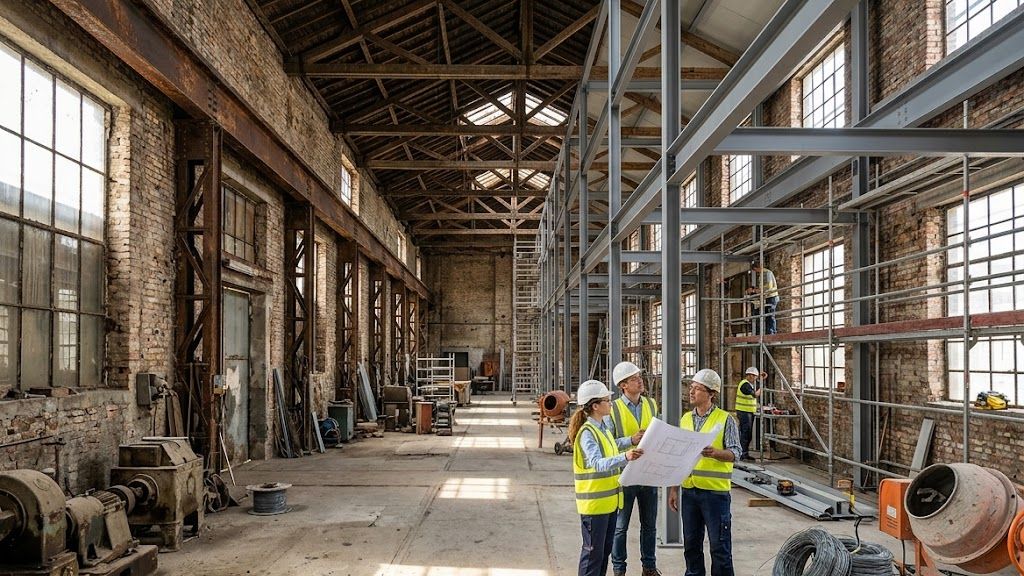
In Rochester, NY, structural engineer consultant plays a vital role in the adaptive reuse of industrial warehouses, a practical strategy that converts existing buildings for new programmatic uses while preserving historic character. Structural engineering consultants confirm load capacity, ensure code compliance, and define focused interventions so buildings can host new functions. This article summarises assessment methods, adaptive‑reuse principles, and regulatory considerations. For comprehensive structural engineering services, consider consulting with experts in the field.
The warehouse district’s historic significance and central location make it a priority for revitalization and raise questions about neighborhood identity.
Adaptive Reuse of Industrial Warehouses for Urban Revitalization
Historical industrial warehouse districts in American cities have a unique and interesting history because of their rapid development and, in most cases, a subsequent neglect. However, because of its historical significance, its usual central location within the city, and architectural features, the warehouse district has become a focus for revitalization. Warehouse districts already have a historic identity and a cohesiveness in urban fabric and building typologies, but what are the effects of adaptive reuse in relation to the identity of the buildings and the district? Adaptive Reuse of Warehouses in Relation to Neighborhood Cohesion and Identity: a case study of New Orleans, Oklahoma City, and Minneapolis, 2017
What Are the Key Structural Assessment Techniques for Industrial Warehouse Repurposing?
Structural assessment is the diagnostic step that determines whether a warehouse can safely accept a new use. Engineers combine observations, testing, and analysis to characterise material condition, structural capacity, and hidden defects; those findings set the scope and priorities for retrofit work.
- Visual Inspections: Thorough surveys identify cracks, deflection, and deterioration visible to the eye.
- Non-Destructive Testing (NDT): Tools like ultrasonic testing and infrared scanning assess materials without damage.
- Load Testing: Controlled loading confirms floor and member capacity for proposed uses.
- Finite Element Analysis: Software models predict behaviour under altered loads and new load paths.
- Material Testing: Samples and lab tests verify concrete, masonry, and steel properties against modern standards.
Together these diagnostics produce a quantified profile of condition and capacity, which supports targeted reinforcement, realistic cost estimates, and permit documentation for engineering services.
How Do Engineers Evaluate Structural Integrity in Old Industrial Buildings?
Evaluations follow stages: an initial visual inspection, targeted NDT (for example, ultrasonic weld checks and ground‑penetrating radar for voids), and controlled load testing where required. Results are reconciled with analytical models to set safety factors and retrofit requirements.
Which Load Analysis Methods Ensure Safe Warehouse Renovations?
Engineers assess dead, live, and environmental loads and examine changes to load paths caused by altered layouts. Analyses identify stress concentrations and inform focused measures—such as beam and floor strengthening—to meet required performance while managing cost and schedule.
How Do Structural Engineering Consultants Integrate Adaptive Reuse Architecture Principles?
Consultants balance preservation with modern performance by quantifying existing capacity, specifying minimal interventions, and detailing discreet upgrades. The aim is to enable new uses while maintaining historic character and meeting safety, accessibility, and operational requirements.
What Engineering Solutions Address Loft Conversion Challenges in Industrial Warehouses?
Loft conversions typically require floor and support upgrades. Common engineering responses include supplemental framing, adding discreet supports, and selective strengthening of members to meet residential or mixed‑use load standards without altering architectural intent. For project‑specific guidance, reach out to discuss your project.
How Are Sustainability Benefits Achieved Through Structural Retrofit?
Retrofitting retains embodied energy, reduces demolition waste, and enables installation of recycled insulation, high‑performance glazing, and efficient systems. These interventions lower operational energy use and lifecycle costs while preserving historic fabric.
What Are the Regulatory and Code Compliance Requirements for Repurposing Industrial Warehouses in Rochester NY?
Code compliance is essential. In Rochester, structural changes must meet provisions for safety, fire resistance, accessibility, and energy performance. Engineering consultants translate code requirements into design criteria, permit documents, and construction controls to secure approvals and protect occupants.
Which Local Building Codes Govern Structural Renovations of Industrial Warehouses?
Local regulations reference the New York State Uniform Fire Prevention and Building Code and may include local amendments. Engineers review applicable provisions for structural safety, fire protection, accessibility, and energy efficiency and reconcile any local requirements within the design.
How Do Consultants Help Navigate Safety Standards During Adaptive Reuse Projects?
Consultants perform early code reviews, identify compliance gaps, and propose technically justified solutions. Early analysis reduces permitting risk, minimises rework, and helps keep projects on schedule and budget.
Can Case Studies Demonstrate Successful Industrial Warehouse Repurposing Projects in Rochester NY?
Case studies demonstrate how assessment and engineered interventions transform obsolete warehouses into functional, code‑compliant spaces while preserving historic value. Documented projects show practical reinforcement strategies and detailing that retain façades and character.
What Structural Challenges Were Overcome in Recent Rochester Warehouse Renovations?
Projects commonly addressed insufficient load capacity and deteriorated façades. Engineers used modern reinforcement—additional steel framing and targeted repairs—to restore performance while preserving architectural features through careful detailing.
How Did Engineering Consulting Reduce Costs and Timelines in These Projects?
By identifying failure mechanisms early, defining focused remediation scopes, and optimising structural solutions, consultants reduced unforeseen work, accelerated delivery, and lowered overall costs. For expert guidance, visit Xceed Engineering.
Frequently Asked Questions
What are the environmental benefits of adaptive reuse in industrial warehouses?
Adaptive reuse reduces demolition waste and preserves embodied energy; it also enables energy‑saving upgrades that lower operational carbon over the building’s life.
How does the adaptive reuse process impact local communities?
Adaptive reuse can create jobs, support new businesses, and reinforce neighbourhood identity by conserving historic architecture and stimulating local engagement.
What role do historical preservation standards play in warehouse repurposing?
Preservation standards define which character‑defining elements to retain and guide permissible upgrades, requiring coordination between engineers, architects, and preservation authorities.
What technology is used in structural assessments of warehouses?
Assessments often use drone surveys, 3D laser scanning, and advanced computer modelling to capture accurate geometry and condition data for data‑driven retrofit design.
How does adaptive reuse contribute to urban density and sustainability?
Converting underused central sites into housing or commercial space increases urban density, reduces sprawl, and preserves open land while supporting walkable neighbourhoods.
What are the primary challenges facing engineering consultants in adaptive reuse projects?
Key challenges are balancing structural upgrades with conservation, meeting modern codes within existing constraints, and coordinating diverse stakeholders; clear technical solutions and communication are essential.
Conclusion
Repurposing industrial warehouses delivers benefits—improved sustainability, increased urban density, and conservation of historic assets. Engaging an experienced structural engineering consultant ensures compliance, safety, and cost‑effective interventions. To evaluate how adaptive reuse can meet your objectives, contact industry experts to discuss tailored engineering solutions.