

Pipe stress analysis measures forces, moments, and displacements in piping systems under steady and changing loads so owners and engineers can confirm structural integrity, code compliance, and reliable long‑term operation. Choosing a nearby firm matters: local teams get on site faster, know regional code interpretations, and resolve construction or commissioning issues quickly to avoid costly delays. This guide breaks down what pipe stress analysis covers, how it protects safety and uptime, and how to evaluate local consultants for thermal, seismic, and dynamic challenges. You’ll find practical vetting criteria, common service offerings in your area, and why local expertise—especially around Rochester, NY—can cut schedule and cost risk. The article also explains how XCEED Engineering and Consulting, P.C. structures its FEA and piping services, when to request a study, and typical turnaround expectations.
What Are Pipe Stress Analysis Services and Why Are They Essential?
Pipe stress analysis creates models of piping systems to find stresses from internal pressure, thermal expansion, vibration, and external loads so designs meet codes and perform reliably in service. Analysts define load cases and boundary conditions with tools like CAESAR II or FEA software to predict movements and forces that inform support locations, anchors, and flexibility solutions. Typical deliverables include calculation reports, model files, support recommendations, and code‑compliance statements that project teams use to finalize HVAC, process, or power piping installations. Modern practice emphasizes traceable workflows and versioned models so teams can reproduce checks during later modifications, reducing rework and improving lifecycle maintenance. The sections that follow explain how these analyses translate into safer systems and list the industries that depend on pipe stress engineering.
Recent literature highlights how pipe stress analysis prevents mechanical failures and keeps systems within industry standards.
Piping Stress Analysis: Preventing Mechanical Failures & Ensuring Code Compliance
Oil and gas facilities rely on piping to move fluids and gases under varying pressure and temperature. Multiple factors—pressure, temperature, mechanical loads, and flow—affect piping behavior. Piping stress analysis evaluates system performance under those loads to prevent mechanical failure. This study reviews stress‑analysis methods tied to piping codes and standards, organizing methods and material selection into focused sections: principal stresses, sustained loads, and occasional load cases. The goal is to demonstrate how code‑based stress analysis reduces failure risk.
The prevention of piping mechanical failures by stress analysis: a review of codes and standards, 2024
Owners and engineers need to know how analysis results become practical safety measures, so the next section outlines the core mechanisms used to prevent failures.
How Does Pipe Stress Analysis Ensure Safety and Compliance?
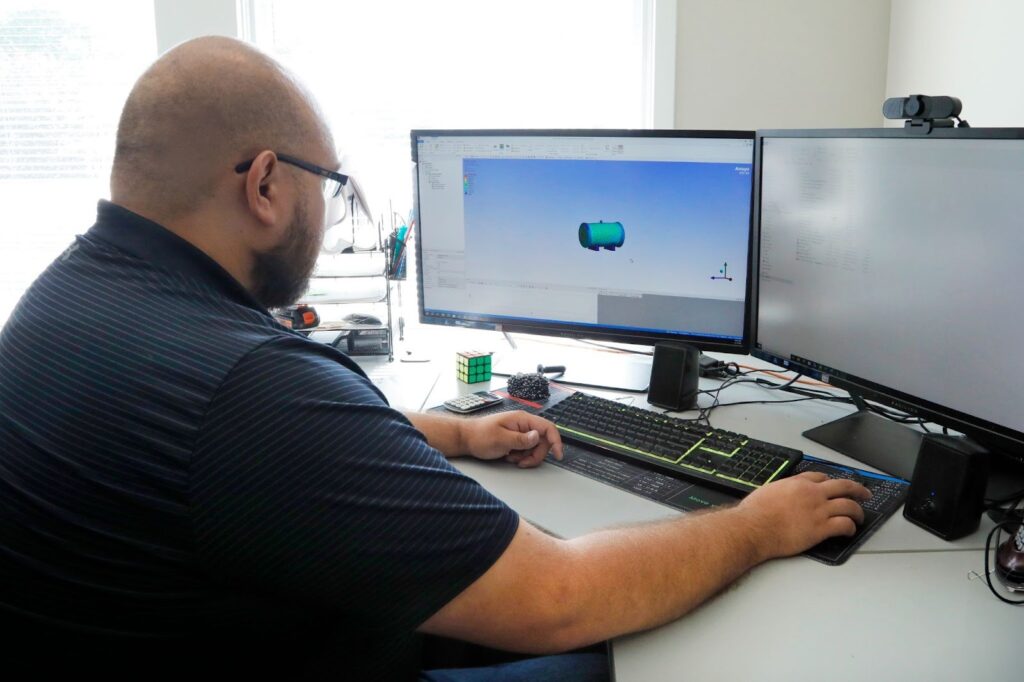
Analysts define critical load cases—internal pressure, steady and transient thermal expansion, wind, seismic loads, and dynamic excitation—and check stresses and movements against allowable limits in codes such as ASME B31.1 and ASME B31.3. The work produces stress intensities and displacement envelopes that point to practical fixes like adding guides, anchors, expansion joints, or rerouting lines to eliminate overstress or fatigue exposure. For example, a thermal expansion study may reveal axial movement that is best addressed with an expansion loop and adjusted hanger spacing to protect a vessel nozzle. Clear documentation of assumptions, boundary conditions, and safety factors supports permitting and inspection and creates a defensible engineering record for regulated facilities.
What Industries Benefit Most from Pipe Stress Engineering?
Regulated sectors that rely on pipe stress analysis include power generation, chemical and petrochemical processing, pharmaceutical manufacturing, municipal water and wastewater, and oil & gas facilities. Power plants focus on high‑temperature creep, thermal cycling, and nozzle loads governed by ASME B31.1. Chemical plants emphasize corrosion allowance and component flexibility to meet ASME B31.3 demands. Pharmaceutical and biotech sites add strict validation and traceability requirements for sanitary piping, while municipal infrastructure projects prioritize durability and seismic resilience. Knowing these industry drivers helps owners request the right scope and deliverables from consultants.
How to Identify Reliable Local Pipe Stress Analysis Companies
Choose a local pipe stress provider using a clear checklist: professional licensure, demonstrable code experience, software proficiency, relevant project history, and the ability to provide field support. A dependable consultant combines PE licensure, FEA and CAESAR II or AutoPIPE competency, and on‑site survey or construction‑phase involvement. Beyond credentials, look for firms that use traceable modeling practices, version control for deliverables, and collaborative workflows with mechanical and structural teams so analysis leads to constructible solutions. Below is a practical vetting checklist and a comparison table that summarizes how each qualification benefits your project.
Use this checklist when screening local firms:
- Professional Licensure and Code Experience: Confirm PE licensure and experience with ASME B31.1/B31.3 to ensure accountability and correct code interpretation.
- Software and FEA Proficiency: Verify skills with CAESAR II, AutoPIPE, and FEA tools for cases that need finite‑element fidelity.
- Project Portfolio and References: Request case studies in your industry showing measurable outcomes like reduced rework or clarified support layouts.
- Local Presence and Field Support: Prefer firms that perform site surveys, temporary instrumentation, and construction‑phase adjustments to lower schedule risk.
These steps narrow the list to providers who can deliver reliable, buildable pipe stress solutions and prepare you to request sample deliverables during proposals.
Intro to the qualifications table: the table below summarizes key qualifications, what they indicate, and how they help you choose the right consultant.
| Qualification | What It Indicates | How It Helps the Client |
|---|---|---|
| PE Licensure | Professional accountability and legal standing | Enables stamped calculations and smoother local code acceptance |
| ASME Code Experience (B31.1/B31.3) | Familiarity with code interpretation and application | Reduces review cycles and speeds permit approvals |
| FEA & CAESAR II/AutoPIPE Proficiency | Ability to handle complex loading and dynamic cases | Delivers accurate models and traceable results |
| Construction‑Phase Support | Field survey and coordination capability | Minimizes discrepancies between model and as‑built conditions |
This comparison highlights which qualifications most directly lower execution risk and accelerate approvals for piping projects.
A brief local note: when comparing firms in your area, XCEED Engineering and Consulting, P.C. lists pipe stress analysis among its core services and emphasizes personalized attention plus advanced FEA capability; their approach is summarized in the company section below.
What Qualifications and Certifications Should Pipe Stress Engineers Have?
Pipe stress engineers should hold a PE license where required and have proven experience applying ASME B31.1 for power piping and ASME B31.3 for process piping—this combination signals legal responsibility and code fluency. Relevant credentials include formal training on CAESAR II, AutoPIPE, or commercial FEA packages and experience in regulated sectors where documentation and traceability matter. Ongoing education and involvement with standards organizations show a firm keeps pace with code updates and best practices. Validate claims by requesting sample calculation pages, model screenshots, and references from projects of similar complexity to reduce surprises during review or construction.
Which Pipe Stress Analysis Software Do Top Firms Use?
Leading firms typically use CAESAR II or AutoPIPE for flexibility and support coordination in standard piping networks, and finite‑element packages for nozzle loads, complex 3‑D junctions, and dynamic or seismic modal analysis. CAESAR II and AutoPIPE are efficient for code checks and rapid iterations; FEA tools give higher fidelity where shell or nozzle stiffness and local stresses matter. Software choice matters because validated workflows and versioned model files speed reviews and future updates—ask prospective consultants which tool they’ll use and why so deliverables and assumptions are clear from the start.
What Specialized Pipe Stress Analysis Services Are Available Near Me?
Local firms commonly offer a range of specialized pipe stress services: thermal expansion studies, seismic and dynamic analyses, support design and optimization, and detailed FEA for nozzles or complex junctions. Each service follows a standard workflow—data gathering, model development, load‑case definition, evaluation versus code limits, and recommended corrective measures such as support changes or component re‑specification. Knowing typical deliverables helps owners specify the right study: a flexibility report, a seismic response‑spectrum analysis, support drawings, or an FEA report with stress contours. The table below maps service subtypes to their key attributes and expected deliverables.
Intro to service deliverables table: this table aligns service subtypes with the deliverables you should request in a statement of work.
| Service Subtype | Key Attribute | Typical Deliverable |
|---|---|---|
| Thermal Expansion Analysis | Temperature‑driven movement and flexibility | Flexibility calculations, recommended loops/guides, hanger schedule |
| Seismic & Dynamic Analysis | Response to ground motion and transient events | Modal shapes, response‑spectrum results, anchor/support modifications |
| Pipe Support Design & Optimization | Load transfer and vibration control | Support drawings, hanger load tables, spacing recommendations |
| FEA for Nozzles & Complex Junctions | High‑fidelity stress distribution | FEA models, stress contour plots, weld/connection recommendations |
How Is Thermal Expansion Pipe Stress Analysis Conducted?
Thermal expansion analysis starts with process temperatures, material properties, piping layout, and support conditions. Engineers model those inputs in a flexibility tool or FEA to evaluate steady and transient temperature cases, apply thermal gradients, and calculate displacements at anchors, guides, and nozzles. Results identify overstress, excessive relative movement, or fatigue‑prone areas. Typical remedies include adding expansion loops, specifying expansion joints, relocating anchors, or adjusting support stiffness to control load paths and protect sensitive components. Deliverables usually include a flexibility report, hanger load table, and recommended support changes that construction teams can implement directly.
Thermal behavior is a common driver of piping issues; academic work explains the mechanics and consequences of constrained thermal expansion.
Thermal Expansion & Stress Analysis in High-Temperature Piping Systems
High‑temperature piping—such as refinery lines—transports pressurized fluids and gases and is vulnerable to large thermal strains. As installed at reference temperature, piping will expand or contract in service, producing end forces and bending moments where constraints exist. If those effects are not accounted for, large stresses can develop that may cause failure. This chapter outlines analytical methods to calculate expansion forces and bending moments and highlights design practices to control thermal stress.
Thermal Expansion in Piping Systems, RB Hetnarski, 2019
What Does Seismic Pipe Stress Analysis Involve?
Seismic pipe stress analysis quantifies earthquake demands using modal or response‑spectrum methods, combines seismic accelerations with service loads, and checks support and anchor capacities against combined limits. Engineers model building and equipment interactions so supports respond consistently with structural motion and apply code‑required load combinations and importance factors for critical systems. The study typically results in revised support layouts, anchor reinforcement, or added seismic restraints to limit relative displacement and protect connections during an event. Deliverables include modal shapes, support force lists, and specific design actions to reduce catastrophic loss risk during seismic events.
Why Choose XCEED Engineering and Consulting, P.C. for Pipe Stress Analysis?
Choosing XCEED Engineering and Consulting, P.C. for your pipe stress analysis needs in Rochester, NY, and surrounding areas offers distinct advantages. As a local firm, XCEED provides faster mobilization, deep familiarity with regional permitting and inspection expectations, and established relationships with local contractors and inspectors. Our local presence enables timely site surveys, quick verification of as‑built conditions, and active participation in construction meetings to resolve discrepancies—significantly shortening approval cycles and reducing travel costs. XCEED’s local knowledge of soil conditions, typical building‑to‑pipe interactions, and municipal review trends further streamlines your project, minimizing back‑and‑forth with authorities. The following points highlight the specific benefits XCEED brings to your project.
- Faster on‑site response: XCEED’s local teams mobilize sooner for surveys and construction support, ensuring rapid progress.
- Lower travel and coordination costs: Our proximity reduces travel time and associated indirect project expenses.
- Stronger local relationships: XCEED’s established contacts with local contractors and inspectors help smooth the approval process.
These practical benefits translate directly to shorter project schedules and fewer unplanned change orders. The following sections detail how XCEED’s local expertise and efficient processes achieve faster turnaround and significant cost savings for your projects.
How Does XCEED’s Local Expertise Benefit Your Pipe Stress Analysis Project?
XCEED’s local expertise significantly speeds verification, as our engineers can quickly reconcile model assumptions with actual site conditions, drastically reducing the chance of costly rework during construction. Our familiarity with regional code interpretations and permitting nuances prevents common review delays, shortening the timeline for stamped deliverables. XCEED’s on‑site presence also enables targeted instrumentation and field measurements to validate models, building confidence in support sizing and avoiding overly conservative designs. Collectively, these factors reduce direct costs through fewer change orders and lower indirect costs by shortening schedules and minimizing downtime risk for your project.
How Does XCEED Ensure Faster Project Turnaround and Cost Savings?
XCEED accelerates projects by employing efficient data‑gathering workflows, leveraging reusable model libraries for common piping arrangements, and utilizing pre‑qualified vendor and contractor relationships that reduce procurement lead times. Our practical practices include rapid site verification, iterative modeling with construction teams, and delivering hanger load tables and support drawings formatted for shop detailing. By combining agile project management with technical rigor, XCEED’s local teams reduce review cycles and make on‑the‑spot adjustments during erection—yielding measurable reductions in schedule and cost overruns. For clients in Rochester and nearby markets, these efficiencies often mean quicker start‑up and lower total installed cost compared with remote providers.
How Does XCEED Engineering Provide Comprehensive Pipe Stress Analysis Services?
XCEED Engineering and Consulting, P.C. delivers end‑to‑end piping design and analysis from concept through construction, blending mechanical and structural engineering with focused FEA consulting and delegated design for regulated industries. Based in Rochester, NY, XCEED emphasizes hands‑on service aimed at practical cost and schedule reductions—claiming potential project savings up to 25 percent—by applying targeted FEA expertise and small, collaborative teams. Their services include pipe stress analysis, finite‑element studies for complex junctions, pipe support design, and delegated design deliverables that meet code and constructability needs. For teams that need concise, actionable reports and prompt field support, XCEED positions itself as a local partner that converts model‑based findings into construction‑ready recommendations; contact them to schedule a consultation or request a scope review for your piping project.
What Are XCEED’s Unique Approaches to Pipe Stress and FEA Consulting?
XCEED combines advanced FEA capability with pragmatic engineering focused on rapid, field‑tested solutions and collaborative decision making. Their agile teams document clear assumptions, maintain versioned models, and produce deliverables that transition smoothly from analysis to shop detailing—reducing coordination delays. By matching analysis fidelity to project risk, XCEED avoids unnecessary overdesign while staying code compliant. This balance concentrates effort where it most reduces cost and schedule exposure.
Which Industry Codes and Standards Does XCEED Comply With?
XCEED references and applies relevant industry standards for piping systems, including ASME B31.1 for power piping and ASME B31.3 for process piping, and uses ASME BPVC Section III where pressure‑boundary components require it. These codes supply allowable stresses, load combinations, and inspection criteria used in model checks to ensure regulatory and safety expectations are met. By mapping analysis outcomes directly to code clauses, XCEED provides clear compliance statements and recommendations that support permitting and inspections and reduce reviewer ambiguity during project handoffs.
What Are Common Questions About Pipe Stress Analysis Services Near Me?
Owners often ask when a pipe stress study is required, how long studies take, and what drives cost and schedule. Turnaround and price depend on complexity—simple branch checks differ from plant‑wide seismic re‑evaluations—so consultants will request drawings, process data, and site access to estimate effort. The table below gives concise Q&A summaries with typical turnaround ranges to help set expectations when contacting local consultants.
Intro to the FAQ table: this quick reference summarizes common procurement questions, short answers, and typical turnaround or cost ranges to help decision makers scope requests.
| Question | Typical Answer Summary | Typical Turnaround / Cost Range |
|---|---|---|
| When is pipe stress analysis required? | At initial design, major modifications, or when service conditions (temperature, pressure) change | Simple study: days–1 week; complex: weeks–months |
| How long does a typical study take? | Depends on scope—single‑run checks are short; plant‑wide or seismic studies take longer | Single run: 3–7 days; plant analysis: 2–8+ weeks |
| What influences cost? | Data completeness, technical complexity, code requirements, and need for field verification | Small: low thousands; large: tens of thousands (scope dependent) |
When Is Pipe Stress Analysis Required for Industrial Projects?
Pipe stress analysis is typically required during initial design for code compliance, after major process changes that alter temperature or pressure, when new equipment nozzles are added, or before commissioning when site constraints affect supports. Code triggers such as design pressure, temperature range, or unusual service conditions require documented analysis under ASME piping codes. Modifications to existing systems often need reanalysis to confirm continued compliance. For renovation or life‑extension work, stress analysis supports risk assessments and recommends retrofits to avoid fatigue or nozzle overstress. Supplying accurate process data and as‑built drawings early shortens engagement time and reduces iterative rework with construction teams.
How Long Does Pipe Stress Analysis Typically Take?
Turnaround ranges from a few days for focused flexibility checks on short runs to several weeks for plant‑wide or seismic studies involving modal analysis and model validation. Time is driven mainly by data availability and model complexity. Simple checks with complete drawings and process conditions move quickly because modeling is straightforward and results map directly to code checks. Complex scopes require field verification, coordination with mechanical and structural teams, and possibly finite‑element modeling, all of which extend analysis time. For an accurate estimate, provide piping isometrics, process conditions, and boundary constraints so the consultant can scope effort and delivery milestones.