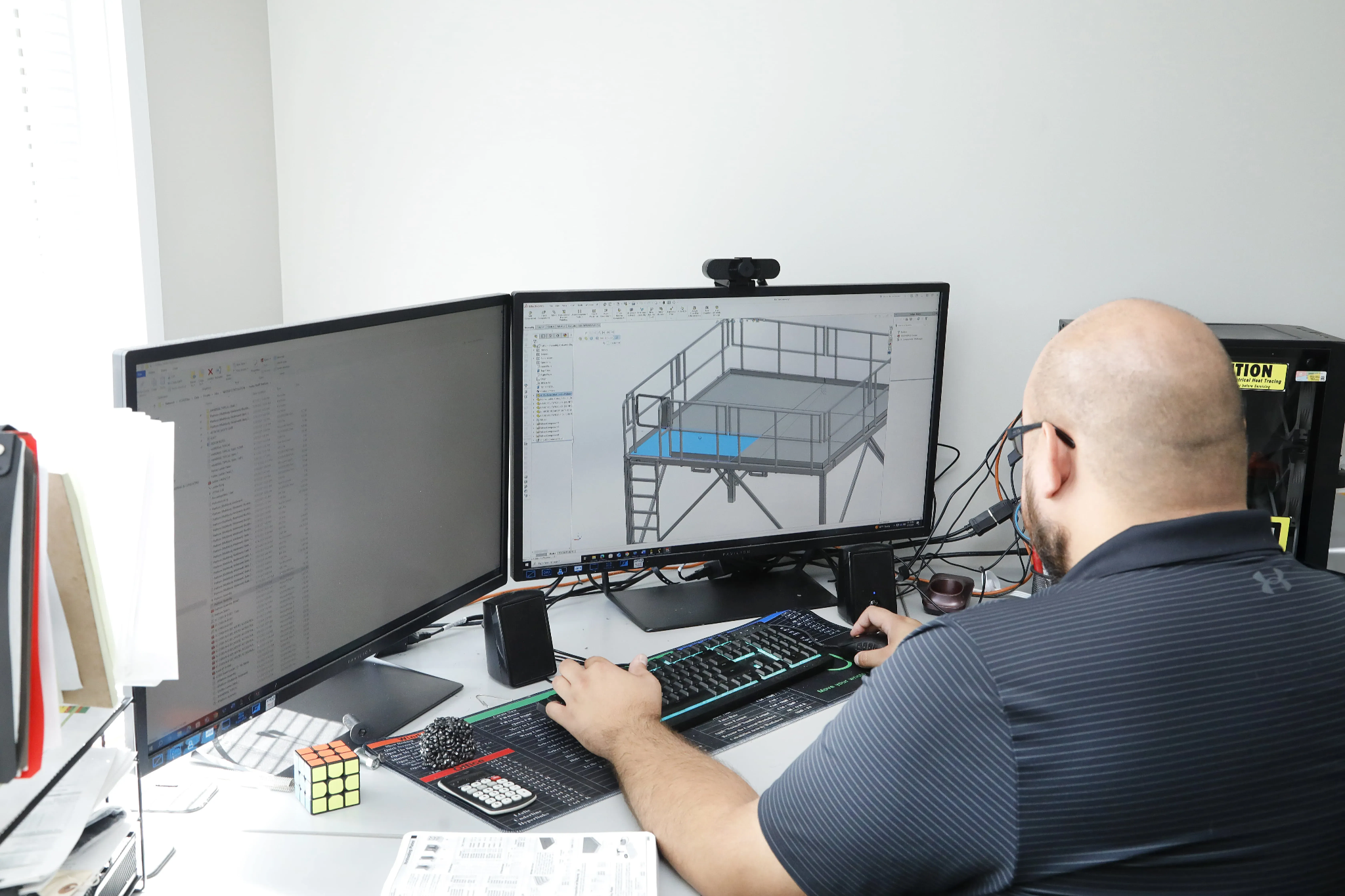
In highly competitive industrial markets, mechanical engineering consulting is a catalyst for innovation and efficiency. This article explains how targeted mechanical design services help businesses accelerate product development, optimize processes, and deliver measurable improvements. You’ll find practical insights into the core design solutions that drive performance—how advanced technologies and proven practices combine to solve complex challenges and raise operational standards. We cover product development improvements, process optimization strategies, and the influence of emerging tools on mechanical design.
Enhanced Product Development
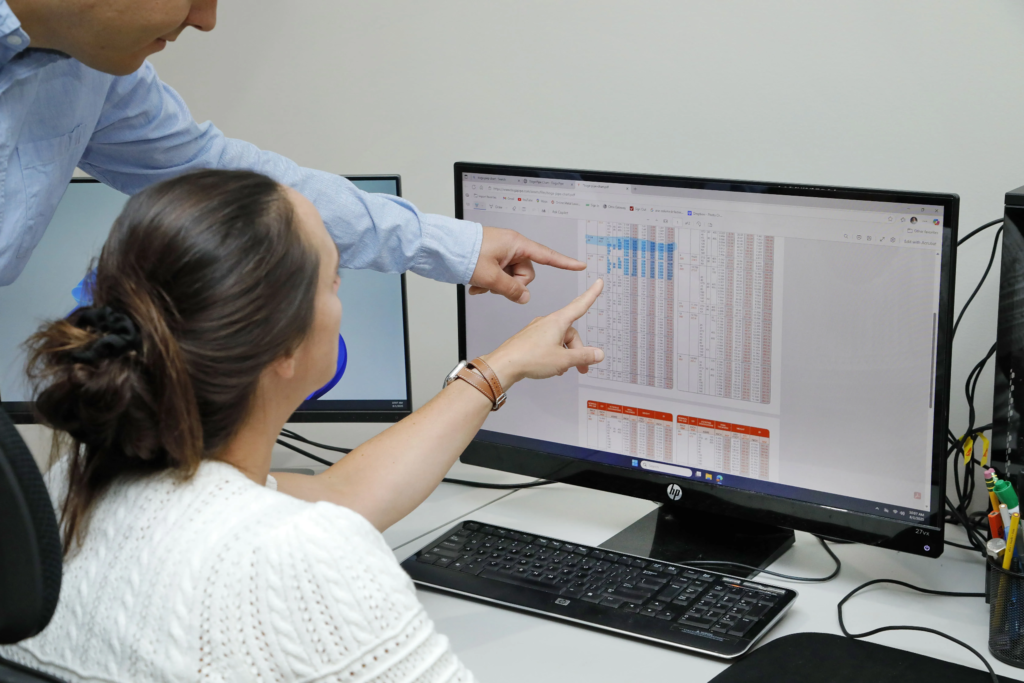
Keeping a competitive edge depends on rapid, reliable product development. Consulting teams apply structured methodologies and advanced simulation tools to tighten design cycles and reduce rework. Finite element analysis (FEA), for example, lets engineers spot stress concentrations and failure modes early, cutting revision time and development costs. That early validation speeds schedules and raises confidence in the final design.
Academic and industry studies reinforce FEA’s value for shortening development timelines and diagnosing potential failures before they affect production.
FEA for Product Development & Fatigue Diagnosis
Numerical simulation techniques have been investigated to compress product development cycles. In this work, a finite element analysis (FEA) method is applied to diagnose fatigue failure in composite materials. The approach is notable because (1) new procedures and guidelines are proposed for defining fluctuating loads in real applications, (2) motion simulation is used to characterize dynamic loads, (3) FEA is recommended as a diagnostic tool to reveal design defects after failures, and (4) the conventional Miner’s rule is extended to estimate fatigue life accounting for variations in both stress magnitudes and frequencies. A case study illustrates the fatigue analysis of a product.
Finite element analysis for diagnosis of fatigue failure of composite materials in product development, ZM Bi, 2016
Process Optimization

Process optimization is a core consulting focus that delivers measurable efficiency gains. Consultants map current workflows, identify bottlenecks, and introduce performance models and predictive-failure techniques to boost reliability and ease maintenance. The result is reduced downtime, smarter resource allocation, and smoother operations across manufacturing lines.
Tools that combine simulation and analytics—such as Modelica-based platforms—show how process modeling can produce actionable recommendations for real-world production problems.
Manufacturing Process Optimization with Modelica & Analytics
This paper presents a design methodology and a prototype system for modeling and optimizing manufacturing process performance. The methodology uses a Modelica simulation environment as a graphical interface for manufacturing practitioners, enabling process engineers to express problems visually. The Process Analytics Formalism bridges Modelica classes with a commercial optimization solver. The experiment demonstrates how manufacturing users can intuitively build performance models, apply optimization techniques, and automatically receive practical recommendations.
Modeling and optimization of manufacturing process performance using Modelica graphical representation and process analytics formalism, G Shao, 2018
Driving Innovation
Innovation thrives when consultants pair domain expertise with simulation and collaboration. Simulation tools let teams iterate designs quickly, testing ideas virtually before committing to prototypes. When FEA specialists and design engineers work together, concepts move from promising to practical—faster and with less risk.
Cost and Resource Efficiency
Cost and resource efficiency are central to competitive projects. Mechanical engineering consultants optimize material use, simplify assemblies, and refine construction workflows to balance cost, quality, and schedule. That discipline helps projects finish on time and within budget while protecting long-term value.
What Are the Core Industrial Mechanical Design Solutions Driving Industry Success?
Key mechanical design solutions that consistently propel industry performance include:
- Custom Mechanical Design Services: Purpose-built designs that address specific operational and product challenges.
- Optimization Techniques: Analytical and simulation-driven approaches that improve throughput and product performance.
- Industry-Specific Applications: Solutions tailored to the regulatory, safety, and operational needs of sectors such as nuclear and advanced manufacturing.
How Do Custom Mechanical Design Engineering Services Address Complex Industrial Challenges?
Custom mechanical design starts with clear requirements and close stakeholder collaboration. Engineers use iterative cycles—concept, simulation, prototype, and validation—to refine solutions. Continuous feedback and disciplined verification ensure the final design meets client objectives, standards, and manufacturability constraints.
Which Mechanical Design Optimization Techniques Enhance Manufacturing Efficiency?
Optimization techniques that deliver manufacturing gains include performance modeling to predict behavior under load, targeted material selection to balance weight and durability, and predictive analytics to detect issues early. Together, these methods reduce scrap, minimize cycle time, and improve first-pass yield.
How Does Mechanical Design Consulting Improve Project Outcomes in Manufacturing Industries?
Consulting improves outcomes by refining construction and fabrication workflows, clarifying integration details, and applying practical engineering judgment. Expert guidance reduces costly changes in the field, improves schedule certainty, and often delivers measurable cost savings—strengthening a project’s profitability and competitiveness.
What Role Do Project Managers and Engineers Play in Mechanical Design Consulting?
Project managers ensure scope, schedule, and budget are aligned with client goals while engineers translate requirements into robust technical solutions. our collaboration—strategic oversight coupled with deep technical know-how—keeps projects on track and ensures deliverables meet performance expectations.
How Are Industry-Specific Standards Integrated into Mechanical Design Solutions?
Designs are developed to comply with applicable industry codes and standards from the start. Consultants stay current with regulatory changes and adapt material selections, testing plans, and documentation accordingly. This disciplined approach protects safety and performance and helps clients maintain regulatory confidence.
What Emerging Technologies Are Transforming Mechanical Design for Industrial and Nuclear Sectors?
Emerging technologies—AI, machine learning, digital twins, and advanced simulation—are reshaping design workflows. They enable faster tradeoff analysis, better predictive maintenance, and virtual testing at scale, making complex systems easier to evaluate and maintain in industrial and nuclear contexts.
How Does AI-Driven Design Optimization Impact Mechanical Engineering Consulting?
AI-driven optimization automates routine checks, explores large design spaces, and surfaces high-performing options that might be missed manually. This speeds decision making, lowers development cost, and improves design quality. As AI tools advance, they will increasingly augment engineering judgment rather than replace it.
These trends reflect a broader shift toward AI-enhanced engineering workflows across multiple disciplines.
AI-Driven Optimization in Mechanical Engineering Design & Efficiency
Engineering is undergoing significant change as artificial intelligence integrates into design, analysis, and operational optimization. This review summarizes current AI-driven optimization methods and our engineering impacts. Representative applications span mechanical and aerospace engineering, civil engineering, electrical and computer engineering, chemical and materials engineering, energy systems, and management. The surveyed work shows how AI improves computational modeling, predictive analytics, and generative design while managing complex multi-objective constraints.
A Review of AI-Driven Engineering Modelling and Optimization: Methodologies,
Applications and Future Directions, JP Li, 2026
What Benefits Do Digital Twin Technologies Provide in Mechanical Design Processes?
Digital twins create live, virtual counterparts of physical assets, enabling real-time performance monitoring and predictive maintenance. By testing scenarios in the twin, teams can prevent failures, extend equipment life, and optimize maintenance schedules—reducing downtime and improving throughput.
Which Best Practices in Mechanical Design Project Management Ensure Reliable and Cost-Effective Solutions?
Reliable, cost-effective projects rely on consistent communication, proactive risk management, and strict quality control. Early planning, clear acceptance criteria, and disciplined change management prevent scope creep and protect margins while ensuring the delivered product meets expectations.
How Are Mechanical Design Workflows Optimized for Timely Industry Deliverables?
Workflows are optimized through standardized handoffs, integrated digital tools for collaboration, and incremental validation checkpoints. These practices reduce rework, shorten lead times, and help teams deliver high-quality results on schedule.
What Metrics Demonstrate Improved Reliability and Cost Savings in Mechanical Design Projects?
Meaningful metrics include on-time delivery rates, percentage reduction in rework, cost savings versus baseline estimates, and reliability indicators such as mean time between failures (MTBF). Tracking these KPIs helps teams measure impact and continuously refine processes.
For more information on how Xceed Engineering can support your mechanical engineering projects, visit our website.